
A little‑noticed Vatican court letter has reignited claims that Benedict XVI was still pope when he died, exposing how easily powerful institutions can hide behind legal jargon while ordinary believers are left in the dark.
How a Routine Vatican Letter Turned into a “Was Benedict Still Pope?” Firestorm
In June 2024, Italian journalist Andrea Cionci and lawyer Roberto Tieghi filed a petition with the Vatican City State Tribunal, asking judges to examine—and ultimately nullify—Pope Benedict XVI’s 2013 resignation. They argue Benedict renounced only the ministerium, the exercise of office, rather than the munus, the office itself. On March 30, 2026, Vatican prosecutor Alessandro Diddi replied that the case was in a “preliminary investigative phase,” with access to documents denied for now and no timeline given.
When that dry procedural letter surfaced publicly weeks later, some Catholic commentators and YouTube channels quickly framed it as proof the Vatican was now seriously “investigating whether Benedict was still the real pope.” Shows in the orbit of Patrick Coffin and other traditionalist voices seized on the wording to ask whether Pope Francis’s election might be invalid. The petition, armed with a formal case number and legal language, suddenly looked to many lay observers like the start of a historic showdown over papal legitimacy.
What Actually Happened in 2013—and What Canon Law Requires
On February 11, 2013, Benedict XVI read his resignation Declaratio in Latin to a consistory of cardinals, announcing he would renounce the “ministerium of Bishop of Rome” effective February 28 at 8 p.m. He cited age and declining strength and stated that his decision was made in full freedom, matching canon 332 §2, which requires a free and properly manifested renunciation. Once the resignation took effect, the See was declared vacant, the papal apartment sealed, and Benedict assumed the unprecedented title “Pope Emeritus.”
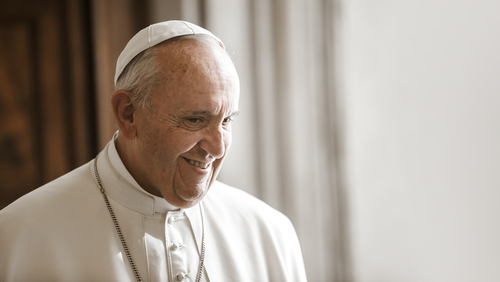
Cardinals convened a conclave, and on March 13, 2013, they elected Jorge Mario Bergoglio as Pope Francis. No cardinals or Vatican offices publicly questioned the resignation’s validity at the time. Benedict, dressed in white and remaining within the Vatican, did create visual confusion for some Catholics unused to seeing two white‑robed figures. Yet canonically only one man holds the munus of pope. Benedict consistently insisted, in interviews and statements until his death in 2022, that his resignation was valid, freely made, and that “there is only one pope,” namely Francis.
The Rise of “Benedict‑Is‑Still‑Pope” Theories and the Cionci Petition
Despite Benedict’s own clarity, a niche online movement quickly developed arguing he either had been pressured or had crafted an invalid resignation. One stream focused on coercion, claiming outside forces made his act unfree. Another leaned on the munus–ministerium distinction, insisting that because Benedict’s Latin text renounced the ministerium, he somehow remained the true pope. These ideas often gained traction whenever controversy flared around Francis’s teaching, feeding a narrative of a Church hijacked by modernist elites.
Andrea Cionci became a central figure in this milieu. In his 2022 book The Ratzinger Code, he claimed Benedict used coded language and gestures to signal that he remained pope but was in a state of impeded see, unable to govern openly. Canon lawyers across the spectrum have rejected this as a misreading of both law and language, but the thesis appealed to Catholics already distrustful of Francis’s agenda. Cionci’s 2024 petition essentially tried to convert that online narrative into a formal legal challenge inside the Vatican’s own courts.
Why the Vatican Tribunal’s Role Is More Limited
The Vatican City State Tribunal functions as the civil and criminal court for the tiny city‑state; its Promoter of Justice, Diddi, acts like a chief prosecutor. Its normal scope is crimes and disputes within Vatican territory, not high doctrinal questions like whether a papal resignation met theological standards. Nonetheless, when private petitions are filed, the Tribunal must open a file, acknowledge receipt, and decide whether the matter is admissible or outside its competence, which explains the “preliminary investigation” language.
Major Catholic outlets that examined the March 2026 letter emphasized that nothing in it suggests a doctrinal re‑examination of Benedict’s resignation. Instead, it indicates procedural handling of a citizen’s petition. Canonists reiterate that Benedict’s expressed intent, the free and public nature of his act, and the universal acceptance of Francis’s election overwhelmingly support the resignation’s validity. From their perspective, the Tribunal’s activity concerns paperwork, not papal succession, even if the wording can be easily spun by media figures seeking drama.
Trust, Transparency, and the Deeper Lesson for American Conservatives
For many rank‑and‑file Catholics, especially those already skeptical of global institutions, the episode feels familiar: distant officials using opaque legal language while average believers struggle to know whom to trust. Conservatives see the same pattern in Washington, the federal courts, and regulatory agencies where unelected bureaucrats and lawyers seem to wield more power than the people themselves. This Vatican story resonates because it fits a wider frustration with elites who answer tough questions with process talk instead of plain speech.
At the same time, the reaction of some media personalities highlights another problem: outrage and speculation are profitable. A routine letter becomes “proof” of a hidden papal crisis, generating clicks and donations but leaving ordinary laymen anxious and divided. For readers on both right and left who believe the system is rigged, this case is a reminder to demand transparency from institutions while also insisting on intellectual honesty from commentators. Strong faith and sound politics both require facts, not fantasies, no matter how tempting those fantasies might be.
Sources:
Online claims of Pope Benedict’s resignation misread Vatican legal procedure