
When democracy on paper meets desperation on the sidewalk, you get a cash economy for signatures that looks a lot more like trafficking than civic engagement.
How Skid Row Became a Marketplace for Signatures
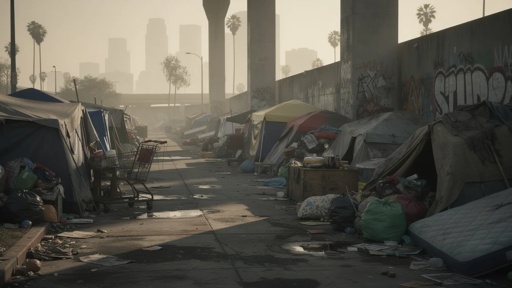
Los Angeles’ Skid Row has long been a magnet for outreach workers, NGOs, and political operatives who know that thousands of people cluster within a few grim city blocks. When James O’Keefe’s team showed up with hidden cameras, they did not find a Norman Rockwell scene of civic virtue. They found cash-for-signature haggling, open talk of fake addresses, and petition circulators who treated the voter roll like a side hustle, not a sacred trust.
On the video, one woman coolly explains the business model: she gets paid by the signature, so she needs to register people in order to cash in, and she is willing to pass a few dollars, cigarettes, or other items back to the homeless signers. Another clip captures someone suggesting a sham address—“Pinocchio Lane” becomes shorthand for a larger culture of “just put anything” on forms that feed directly into California’s official election machinery.
What The Law Says Versus What The Camera Shows
Federal election law draws a bright red line: you do not pay people to register to vote, and you do not feed the system false addresses or fabricated details. California’s own election code backs that up, labeling payments for registrations and fraudulent information as felonies. Paying circulators per signature sits in a gray, tightly regulated zone; paying signers or registrants is the hard no. On Skid Row, the camera appears to catch people stomping over that line, not tiptoeing near it.
O’Keefe’s team documented 28 transactions or offers of value over just a few days. He argues this is only the tip of the iceberg, extrapolating to “tens if not hundreds of thousands” of similar acts statewide. That extrapolation is a claim, not a proven number, but the math of common sense should bother anyone who values honest elections: if this much surfaces in one neighborhood with one camera crew, what happens in the thousands of corners no one is filming?
NGOs, Taxpayer Dollars, And Plausible Deniability
The cameras did not just capture hustling petition workers; they also panned across the ecosystem around them. Nearby stand major homeless service providers, including the Weingart Center, within the funding orbit of the Los Angeles Homeless Services Authority, which distributes federal and local dollars. O’Keefe alleges that at least one staffer in this world directed people toward circulators and coached “plausible deniability” when politics mixed with services.
No one has produced evidence that federal grant money literally bought a single illegal signature. Yet the optics are brutal for any taxpayer with a conservative instinct for stewardship. Government dollars feed facilities; those facilities allegedly provide a pipeline of desperate people to petition bounty hunters; the resulting signatures and registrations become political ammunition in statewide fights. Even if lawyers eventually slice that chain into technically separate links, it still smells like a system that treats the homeless as a commodity.
Officials Respond, But Charges Lag Behind
After O’Keefe submitted his footage, the Los Angeles County District Attorney’s Office confirmed it opened a preliminary review file. That is bureaucracy’s way of saying, “We have the complaint; we are looking.” Governor Gavin Newsom’s office went further rhetorically, calling the conduct a felony under state law and vowing that anyone caught doing it should be prosecuted “to the fullest extent.” Yet as of the latest reporting, those strong words have not turned into handcuffs for anyone in the video.
This gap between what the law plainly forbids and what the justice system actually prosecutes is where public trust dies. Americans with conservative instincts see two standards hardening: minor paperwork mistakes by ordinary citizens can bring swift trouble, while organized, politically useful misconduct is slowly “reviewed” for months or years. If a woman on camera exchanging cash for registrations cannot be charged, many will ask who ever could be.
BREAKING: Woman Caught on O’Keefe Undercover Camera Illegally Paying People to Register to Vote on Skid Row Federally Charged
READ: https://t.co/AFem7dtK7n pic.twitter.com/h1u0ffN5nJ
— The Gateway Pundit (@gatewaypundit) May 18, 2026
Authorities may ultimately decline cases, cite evidentiary gaps, or quietly pursue lower-level plea agreements. Yet that outcome would still leave the country with the same unsettling picture: a major American city where the most vulnerable residents trade signatures for survival, while NGOs funded in the name of compassion operate a few steps away. If the law does not decisively shut that down, voters will draw their own verdict about how seriously California takes election integrity.
Why This Matters Beyond One Gritty Street
This scandal sits at the intersection of two debates that define modern America: election integrity and the failure of the urban safety net. The people on Skid Row are not villains; they are leverage. When the state allows paid political operatives to work that leverage with minimal oversight, it abandons both conservative principles of honest process and basic moral duty. Voting becomes a transactional hustle instead of a civic right anchored in citizenship and conscience.
Reasonable people can fiercely disagree over voter ID, mail-in ballots, or ballot harvesting. But almost no one outside the professional political class thinks “cash, cigarettes, and fake addresses for signatures” belongs anywhere near the phrase free and fair elections. A serious response would start with aggressive enforcement of existing laws, strict rules around political activity near taxpayer-funded shelters, and a clear message: if you want someone’s vote, earn their trust and argument, not their hunger.
Sources:
New video appears to show election fraud in California, bribes & drugs for signatures
New video appears to show election fraud in California, bribes & drugs for signatures