

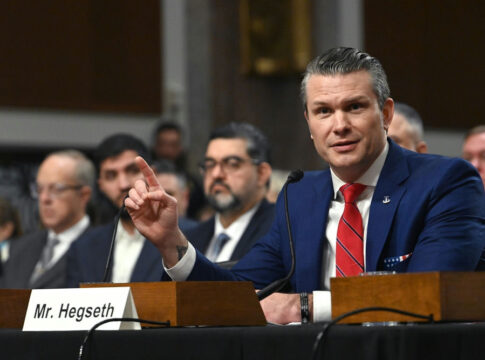
Defense Secretary Pete Hegseth is now facing congressional investigation after military commanders across 50 installations allegedly told troops that President Trump was “anointed by Jesus” to start Armageddon through war with Iran, sparking over 200 formal complaints about religious coercion in the chain of command.
Widespread Complaints Trigger Congressional Response
An anonymous non-commissioned officer filed a complaint with the Military Religious Freedom Foundation in early March 2026, detailing how commanding officers told subordinates the Iran war represented God’s divine plan and referenced apocalyptic passages from the Book of Revelation. Within days, MRFF received over 200 similar complaints from servicemembers stationed at 50 installations spanning all military branches. These reports alleged commanders explicitly stated President Trump was “anointed by Jesus to light the signal fire in Iran to cause Armageddon,” raising immediate constitutional concerns about religious coercion within the military hierarchy.
More than two dozen Democratic lawmakers responded by sending a formal letter to the DOD Inspector General on March 6, 2026, demanding investigations into six specific areas of concern. The letter requested probes into the origins of prophetic statements filtering through the chain of command and potential violations of DOD Instruction 1300.17, which mandates religious neutrality in military operations. Lawmakers warned that religious rhetoric had “metastasized” from Hegseth’s leadership, creating an environment where apocalyptic messaging became normalized among field commanders responsible for troop readiness and morale.
Hegseth’s Pentagon Prayer Services Establish Religious Framework
Secretary Hegseth launched monthly Christian worship services at the Pentagon in February 2026, marking a significant departure from traditional military religious accommodation practices. At a February 18 service, Hegseth invoked biblical references to divine protection and God’s glory in battle, drawing parallels to Old Testament military victories like Gideon’s triumph. These gatherings featured active-duty leadership including members of the Joint Chiefs, signaling institutional endorsement of explicitly Christian framing for military operations. Hegseth characterized these initiatives as promoting “spiritual readiness” alongside physical and mental preparedness for combat.
During a March 2, 2026, Pentagon press conference, Hegseth publicly mocked Iran’s “prophetic Islamic delusions” about end-times theology while simultaneously framing U.S. military intervention through Christian nationalist interpretations of biblical prophecy. This rhetoric coincided with escalating combat operations in Iran, where field commanders echoed similar messaging to frontline troops. The Committee on American Islamic Relations condemned Hegseth’s statements as “unacceptable,” noting the irony of criticizing Iranian religious justifications for conflict while advancing a Christian version of apocalyptic warfare that alienates non-Christian servicemembers who comprise a growing portion of military ranks.
Constitutional Obligations Face Religious Coercion Threat
U.S. military personnel swear oaths to defend the Constitution, a secular document that guarantees religious freedom without establishing state-sponsored faith. DOD Instruction 1300.17 explicitly prohibits commanders from using their authority to promote religious beliefs or coerce subordinates into religious activities. The widespread nature of complaints—spanning 50 installations across Army, Navy, Air Force, and Marine Corps units—suggests systemic implementation rather than isolated incidents. Military Religious Freedom Foundation president Mikey Weinstein called the statements “outrageous” violations of constitutional and DOD standards, emphasizing that apocalyptic messaging undermines the professional military ethic.
Senator Kelly sent a separate March 16, 2026, letter questioning Hegseth’s “no quarter, no mercy” rhetoric in the context of law of war compliance, adding another layer of concern about how religious framing might influence adherence to Geneva Conventions. Critics argue this approach risks normalizing religious justification for military action, departing from America’s tradition of civilian control over a secular armed forces. Supporters like evangelical leader John Hagee view the Iran conflict as prophetic fulfillment protecting Israel, representing a theological interpretation that prioritizes end-times beliefs over strategic military doctrine. This creates morale risks for troops who question whether orders stem from operational necessity or religious conviction.
Hegseth Invokes Divine Purpose to Justify Military Might https://t.co/1tcAy7StW5
— John Sonntag (@sonnje) March 20, 2026
The DOD Inspector General has been contacted regarding the investigation demands but has not issued public responses as of mid-March 2026. The outcome will likely determine whether religious rhetoric remains confined to voluntary worship settings or continues influencing operational command structures. For servicemembers who value the Constitution’s religious neutrality protections, the investigation represents a critical test of whether military leadership upholds secular oaths or permits faith-based messaging to shape combat justifications. This controversy exposes tensions between religious expression rights and the military’s obligation to maintain unit cohesion across diverse belief systems during wartime operations.
Sources:
Lawmakers Want DOD, Hegseth Investigated for Biblical Armageddon Claims
U.S. Troops Told Iran War Will Bring on Biblical End Times
Senator Kelly Letter to Hegseth on Law of War Compliance
Baptizing the Battlefield: Pete Hegseth’s Holy War at the Pentagon
This sounds like the biggest bunch of Fake News b.s.
What a load of crap.