

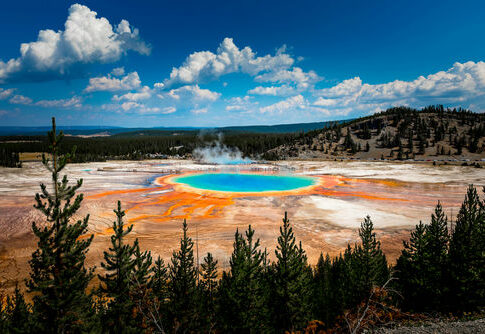
America is about to tell foreign visitors they are welcome in our national parks—just not without an extra $100 at the gate.
A sharp new price tag on the American postcard
Yellowstone, Yosemite, Zion—these are not just parks, they are America’s postcards to the world. Starting January 1, 2026, any non-U.S. resident age 16 or older who wants to step into 11 of these crown jewels will pay the usual entrance fee plus an extra $100 per person. That surcharge sits on top of seven-day vehicle fees that already run roughly $20–$35. Families doing a once-in-a-lifetime tour will feel that math fast.
The Department of the Interior defends this as “modernized, more affordable” access, pointing out that U.S. residents keep their $80 America the Beautiful Annual Pass while a new Non-Resident Annual Pass comes in at $250. The new pass lets a foreign visitor and up to three additional adults skip the $100 surcharge at the 11 designated parks, but only after swallowing that steep upfront cost. For short trips, many visitors will simply pay the fee at each gate instead.
Who pays more, who pays less, and why it matters
The nonresident fee applies at 11 heavily visited, globally famous parks: Acadia, Bryce Canyon, Everglades, Glacier, Grand Canyon, Grand Teton, Rocky Mountain, Sequoia & Kings Canyon, Yellowstone, Yosemite, and Zion. International visitors headed to two or three of these in a single trip will either stack $100 charges per park or buy the $250 Non‑Resident Annual Pass to cap the damage. Children under 16 remain exempt from the surcharge but not from regular fee rules.
U.S. residents come out of this structure comparatively favored. Their America the Beautiful Resident Annual Pass stays at $80. Fee‑free days, once a symbol of open access for everyone, now apply only to U.S. citizens and permanent residents. That shift tracks with conservative priorities that say American taxpayers deserve a clear home‑field benefit on public lands they fund. The tension comes when that principle intersects with how America chooses to present itself to the rest of the world.
From uniform welcome to citizenship pricing
For decades, national parks charged by vehicle or person, not by passport. Everyone paid the same for a given entrance type, while certain discounts—like Senior, Military, or Access Passes—were reserved for Americans. The 2026 policy crosses a new line: it does not just reward residency with discounts; it imposes a premium solely on non‑residents at 11 iconic parks. The legal and policy roots trace back to a Trump‑era executive order directing Interior to raise fees for nonresidents to fund park improvements.
According to NPS guidance, entrance stations will check residency using passports, state IDs, or immigration documents when selling passes or honoring fee‑free days. Frontline staff will now referee questions like why one family in the car pays $100 per adult and the other does not. Staff quotes in coverage warning of “alienating visitors for decades” reflect not just cost concerns but discomfort with the optics of scrutinizing nationality at what has long been marketed as “America’s Best Idea.”
Conservative case for higher nonresident fees—and the conservative caution flag
Supporters of the new structure argue that international tourists should shoulder more of the bill for strained infrastructure and crowding at the most in‑demand parks. The revenue goes back into federal recreation areas to repair roads, restrooms, and trails in places that global tourism heavily wears down. From a sovereignty and fiscal responsibility standpoint, asking non‑taxpayers to contribute more when using high‑cost assets aligns neatly with conservative common sense.
However, any conservative value set that stresses strong local economies and a confident, outward‑facing America must also weigh the downside. Gateway towns around Yellowstone, Yosemite, and Zion depend on foreign tour buses, hotel nights, and restaurant spending. If a family from Europe recalculates and skips a park—or an entire U.S. trip—because a four‑adult party now owes an extra $400 or more, that cost lands on American small businesses, not Washington.
Frontline friction, tour operators, and long‑term fallout
Commercial tour operators now must budget for $100 per non‑U.S. participant entering the surcharge parks unless those travelers carry resident or non‑resident annual or lifetime passes. The NPS explains that a Non‑Resident Annual Pass will cover the passholder plus three additional nonresident adults in commercial groups, but the operator still has to verify who is covered and who is not. Every bus at a park gate now becomes a rolling accounting exercise with higher stakes and more room for conflict.
Frontline rangers will feel that stress. They will be the ones explaining why fee‑free days no longer apply to a foreign visitor, why a passport is now a pricing tool, and why a travel dream that already involved expensive flights and hotels comes with a surprise federal surcharge. If their warnings about “alienating visitors for decades” prove accurate, the United States may have traded a quick infusion of park revenue for a slow leak in soft power—sending a message that the welcome mat at our most beautiful places now comes with fine print based on the cover of your passport.
Sources:
Nonresident Fees – National Park Service
Commercial Tours and Nonresident Fees – National Park Service
National park fees are changing in 2026 – Roadtrippers
This becoming rediculous to write the least about this new policy! All that is happening is more waste of time and increase the confusion and angst for all the people involved. Keep the Park passes that are for seniors, year passes and a basic fee for non holders. As per government to screw things up for all instead of making it better for all!
Leave it up the government to make life more difficult to see the beauty of America. Us the KISS principle. Keep the Senior lifetime pass, the yearly pass and the daily pass! Why put such a burden on everyone concerned and keep tourism an easy process and all benefit!