

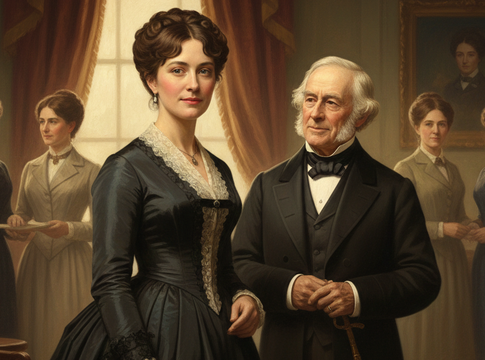
Martha Washington’s unique place in American history as the only First Lady to be featured on U.S. currency highlights both her legacy and a fascinating chapter in our nation’s financial past.
Martha Washington’s Place on the $1 Silver Certificate
Martha Washington, the esteemed First Lady, holds the singular honor of being the only woman, aside from allegorical figures, to appear on U.S. currency. This distinction reflects her significant place in American history. The $1 silver certificate, first issued in 1886, prominently featured her portrait, which was adapted from a painting by Charles Jalabert. This design choice underscored her status as a respected figure in post-Revolutionary America.
The silver certificate was not just a piece of currency but a symbol of the times. It was backed by the U.S. government’s silver holdings, which meant it could be exchanged for silver at the Treasury. This backing gave the certificate real value during an era when the stability of paper money was often questioned.
The Historical Context of the Silver Certificate
Introduced 17 years after George Washington’s image first appeared on currency, the silver certificate bearing Martha Washington’s likeness was part of a broader monetary policy. This policy aimed to maintain confidence in paper money by linking it directly to precious metals. Such measures were crucial during the late 19th and early 20th centuries, a period marked by economic fluctuations and debates over monetary standards.
The currency was well-received by the public, as evidenced by historical records from newspapers such as The Indiana Democrat. It remained in circulation until 1957, serving as a testament to Martha Washington’s enduring legacy and the nation’s evolving financial landscape.
Legacy and Significance
Martha Washington’s presence on the $1 silver certificate is more than a historical footnote; it is a reflection of her influence and the respect she commanded. Her inclusion on currency highlights the important roles women have played, even when not fully recognized by society at large. As the nation continues to grapple with issues of representation and historical acknowledgment, her story serves as a reminder of the complex tapestry of American history.
While the certificate is no longer in circulation, its existence is a cherished part of numismatic collections and a fascinating chapter in the story of U.S. currency. It stands as a unique tribute to a First Lady who helped shape the early United States.