

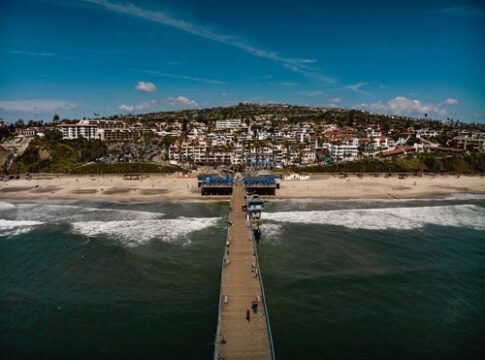
A wealthy California beach town just handed Border Patrol sweeping surveillance powers with zero local oversight, prioritizing federal immigration enforcement over residents’ constitutional privacy rights in a deal that could last two decades.
Federal Overreach Disguised as Public Safety
San Clemente’s City Council approved a troubling lease agreement on January 20, 2026, granting U.S. Customs and Border Protection unfettered surveillance authority over their coastal community. The decision allows CBP to install a sophisticated camera system near the Avenida Salvador Road water tower, equipped with thermal imaging capable of detecting movement through fog and darkness across vast distances. Council members voted 3-1-1 despite vocal public opposition centered on privacy violations and the absence of local oversight. CBP will operate the million-dollar system independently, paying merely $10 for initial five-year access with renewal options extending to 20 years.
Trust Without Verification Undermines Constitutional Protections
Councilmember Mark Enmeier cast the lone dissenting vote, warning that residents are surrendering civil liberties without verification mechanisms. His concerns reflect legitimate constitutional questions: CBP refuses contractual guarantees preventing residential area scanning if smugglers enter city limits. The agency maintains exclusive footage control, denying local authorities access to data collected over their own jurisdiction. This arrangement violates basic accountability principles conservatives champion—limited government power requires oversight and transparency. Mayor Pro Tem Steve Knoblock championed the proposal, declaring support for President Trump’s enforcement agenda, yet even well-intentioned security measures become dangerous when divorced from constitutional safeguards protecting citizens from unchecked federal surveillance.
Panga Boat Activity Justifies Deterrence Strategy
San Clemente experienced 18 panga boat landings last year, representing over 50 percent of all such incidents across Los Angeles and Orange Counties combined. These small vessels transport illegal immigrants and contraband from Mexico, posing genuine public safety risks that residents rightfully expect local officials to address. Mayor Rick Loeffler emphasized deterrence value, stating the camera system makes panga operations unsafe for smugglers exploiting coastal vulnerabilities. The sophisticated thermal technology can monitor activities extending to Catalina Island, providing CBP unprecedented detection capabilities. However, officials confirmed no statistical increase in landings compared to 2024, raising questions whether extraordinary surveillance measures match actual threat levels or simply expand federal presence under security pretenses.
Dangerous Precedent for Coastal Communities
San Clemente’s approval establishes Orange County’s first municipal partnership hosting CBP coastal surveillance infrastructure, potentially influencing neighboring beach towns facing similar smuggling challenges. City officials are already exploring additional camera installations at San Clemente Pier, signaling expansion beyond the initial hilltop location. This precedent concerns civil liberties advocates and constitutional conservatives alike—once communities normalize federal surveillance apparatus lacking local control, reversing course becomes politically difficult. Resident Robyn Seymour characterized the agreement as constructing a “federal watchtower” costing liberty. The Trump administration’s immigration enforcement mandate deserves support, but constitutional principles demand that security efforts respect Americans’ Fourth Amendment protections against unreasonable surveillance, especially when federal agencies refuse basic transparency commitments to the communities they monitor.
Sources:
San Clemente approves high-powered Border Patrol camera to monitor panga boats on coast
San Clemente Border Patrol agreement coastal surveillance cameras
San Clemente CBP maritime surveillance