

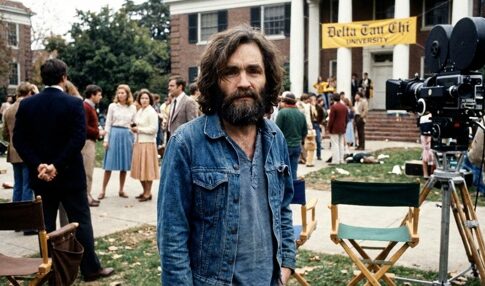
A new revelation about the origins of a beloved comedy classic uncovers a bizarre connection to one of America’s most notorious criminals, Charles Manson.
The Origins of Animal House
The classic 1978 comedy National Lampoon’s Animal House has an unexpected origin story: it was initially conceived as a script about Charles Manson in high school. Titled Laser Orgy Girls, the script was a brainchild of writers Douglas Kenney and Harold Ramis. It depicted Manson engaging in wild antics while on a quest to meet aliens. This bizarre premise was later transformed into the college fraternity comedy we know today, following producer Matty Simmons’ rejection of the explicit high school setting.
The movie’s original concept emerged from the chaotic creative environment of National Lampoon magazine during the 1970s. Amid cultural shifts after the 1960s, Kenney and Ramis were tasked with developing a film project. Their initial pitch was rejected due to its explicit nature, prompting a pivotal shift to a more acceptable college setting. This change was crucial, allowing the film to become a cultural staple without courting controversy.
Key Stakeholders in the Film’s Evolution
The development of Animal House involved several key stakeholders. Douglas Kenney, a co-founder of National Lampoon, sought to channel his personal struggles into creative freedom. He collaborated with Harold Ramis, a comedic innovator. Producer Matty Simmons played a decisive role, rejecting the high school elements and steering the project towards a college setting. Chris Miller later joined, infusing the script with personal experiences from Dartmouth fraternities, enhancing its authenticity.
Despite his unwitting inspiration, Charles Manson had no involvement in the film’s development. His notorious image from the 1969 Tate-LaBianca murders influenced the original script’s shock value but was ultimately discarded in favor of a more lighthearted narrative.
Impact and Legacy of Animal House
The transformation of Animal House from its controversial origins to a successful comedy had significant impacts. The film’s success helped define the frat comedy genre and launched the careers of its writers. It grossed over $141 million on an $8 million budget, highlighting the commercial viability of its new direction. The film’s enduring legacy also paved the way for future comedies like Old School and American Pie, despite the original Manson-inspired script being shelved.
The shift away from the Manson narrative allowed Animal House to avoid potential backlash and remain a favorite in American cinema. The film revitalized 1970s comedy and set a nostalgic tone for pre-1960s innocence, without delving into the darker aspects of the era.
Sources:
The original Animal House script based on Charles Manson
Charles Manson Family: Scenes from Their Desert Hovels
The Triumphant Disgrace of Animal House