

California’s governor just celebrated laying the first rails for a train project that’s over a decade late, more than $100 billion over budget, and connects two cities nobody asked to link—while half the state’s lawmakers refused to show up.
The Ceremony Nobody Wanted to Attend
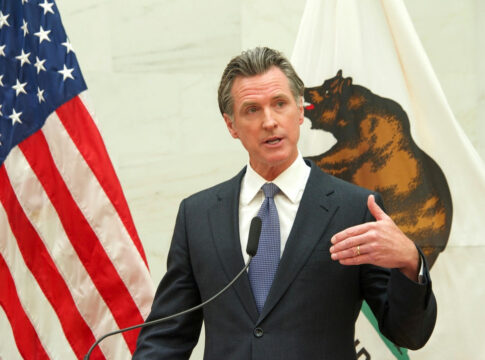
Governor Gavin Newsom stood in Shafter wearing work gloves and a smile, celebrating the completion of a 150-acre railhead facility that will stage materials for California’s high-speed rail project. The Southern Railhead represents the formal beginning of track installation for a train system voters approved in 2008, with promises of 220 mph speeds and a 2020 finish.
Eighteen years later, the ceremony featured symbolic rail-laying for a project that’s become a national punchline, with local Kern County lawmakers so unimpressed they boycotted entirely. Newsom declared no state is closer to launching high-speed rail, technically, since California remains the only state actively constructing such a system. However, that distinction feels hollow given the circumstances.
From Grand Vision to Central Valley Compromise
Proposition 1A sold California voters on a futuristic rail line connecting Los Angeles and San Francisco, capable of speeds exceeding 200 mph, funded initially with $9.95 billion in bonds. The reality delivered endless environmental lawsuits, land acquisition nightmares, and funding gaps that forced Newsom in 2019 to abandon the original vision. The scaled-back plan focuses on 171 miles between Merced and Bakersfield, two cities whose combined metro populations barely crack one million. This isn’t the gleaming coastal connection promised; it’s a Central Valley consolation prize that officials now frame as a jobs program rather than a transportation revolution, with 14,500 positions created according to state claims.
The Math That Doesn’t Add Up
California has committed $22 billion to a segment that requires $33 billion, leaving an $11 billion funding gap with no clear source. The broader system’s cost estimates now exceed $100 billion, a figure so astronomical that it dwarfs the original projections by more than three times. Taxpayers watching this unfold see 119 miles under active construction, 80 miles of guideway completed, and 58 structures built—impressive-sounding numbers that obscure a fundamental question: will operational trains ever justify this expenditure? The project’s defenders point to tangible infrastructure and job creation, valid arguments that sidestep whether completing a Merced-to-Bakersfield line serves the state’s actual transportation needs or represents too much sunk cost to abandon.
Political Theater Versus Economic Reality
Newsom’s declaration that “we can’t go back” captures the project’s core dilemma perfectly. California High-Speed Rail Authority CEO Ian Choudri talks about partnerships with private firms like Brightline West for potential Las Vegas extensions, signaling officials know they need private capital to salvage this. Transportation Secretary Toks Omishakin frames the railhead completion as tangible progress toward a cleaner future, hitting the right environmental notes for progressive voters.
Meanwhile, conservative critics see vindication in every ceremony celebrating milestones that should have been completed years ago. The partisan divide misses a bipartisan truth: mega-projects worldwide, from Britain’s HS2 to Boston’s Big Dig, routinely exceed budgets and timelines, suggesting California’s failure reflects systemic infrastructure challenges rather than purely political incompetence.
What Taxpayers Actually Bought
Central Valley communities benefit from construction jobs and infrastructure investment that brings economic activity to regions often overlooked. Kern County Supervisor Leticia Perez attended the ceremony recognizing this regional boost, even as state taxpayers absorb costs that could have funded countless other priorities. The jobs argument carries weight for communities seeing paychecks. Still, it rings hollow for taxpayers in San Francisco and Los Angeles who were promised direct service, only to have construction funded far from them. This disconnect fuels the “train-to-nowhere” criticism, a label that’s unfair to workers building real structures but accurate in describing the project’s failure to deliver its core promise of connecting California’s major population centers.
Gavin Newsom Mocked Into Next Week As He Holds Ceremony Honoring Invisible High-Speed Train – Then Just Hours Later the Irony Hits Even Harder! (Video) https://t.co/3MWQbHhqJy
— Katherine Hansley (@JaelCorbleu) February 6, 2026
The ceremony’s timing reveals either tone-deaf political instincts or calculated defiance. Celebrating the start of track-laying nearly two decades after voter approval invites mockery, yet Newsom’s team clearly decided showcasing progress beats silence. California Globe coverage noted the event as a “hopeful checkpoint” past the point of no return, acknowledging the project’s momentum makes cancellation politically difficult despite its troubles. Streetsblog commentary urged Newsom to “bring it home,” reflecting progressive transportation advocates’ desire to see any success with high-speed rail in America, even a compromised one. The lack of a specific ironic development “hours later” in neutral reporting suggests that critics were stretching for narrative impact. However, the broader irony of celebrating massive delays and overruns requires no embellishment.
Sources:
Governor Newsom Announces Major High-Speed Rail Milestone: Track Installation to Begin
Edhat – Governor Gavin Newsom Announces Completion of Kern County High-Speed Rail Railhead Facility
KMPH – CA High-Speed Rail Authority Southern Railhead Facility in Kern County Completed
Streetsblog San Francisco – Commentary: It’s Time for Newsom to Bring It Home on High-Speed Rail