

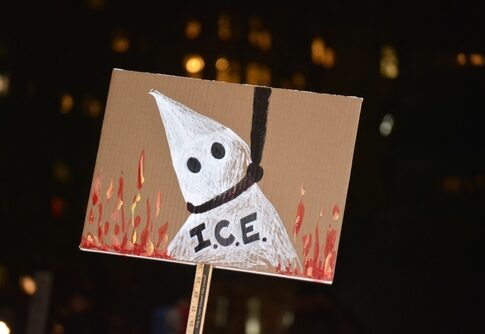
Anti-ICE activists in Minnesota demand identification from innocent citizens, mistaking them for federal agents, revealing the irony in their methods.
Activists Mistake Citizens for ICE Agents
On January 24, 2026, independent journalist Hailey West was followed by multiple vehicles in Minneapolis, Minnesota. The drivers were anti-ICE activists who believed West’s vehicle was listed in their crowdsourced “ICE Database” as belonging to federal agents. When West stopped, the activists confronted her group, demanding identification and proof of residence. Despite West’s repeated denials of being affiliated with ICE, the activists continued their harassment, blowing whistles and accusing the group of abduction.
This incident underscores the irony and hypocrisy of anti-ICE activists who, while opposing ICE’s identity checks on immigrants, are themselves demanding identification from ordinary citizens. This situation has raised concerns about the overreach and potential dangers of crowdsourced databases used to track supposed federal agents. This confrontation is part of a broader pattern of aggressive anti-ICE actions in Minnesota, fueled by local officials’ rhetoric against federal immigration enforcement.
Background on Anti-ICE Activism
Anti-ICE activism has surged since 2018, intensifying under the Trump administration’s renewed deportation efforts. Minnesota, with its sanctuary policies and vocal opposition from Democratic leaders like Gov. Tim Walz and AG Keith Ellison, has become a hotspot for these activities. The use of apps and databases by activists to track suspected agents exemplifies a new form of street-level vigilantism.
These actions have led to increased tensions between federal authorities and local activist groups. Notable incidents include the harassment of tech workers mistaken for ICE agents and confrontations with protesters during federal operations. The rhetoric from state leaders is seen by some as encouraging these aggressive tactics, further straining relations between local and federal entities.
Implications and Reactions
The confrontation involving Hailey West raises significant concerns about the implications of such vigilantism. In the short term, there is a risk of violence stemming from misidentification and harassment. Long-term consequences could include lawsuits against officials perceived to be inciting such behaviors, as well as a deterioration of trust in law enforcement and government institutions. This situation also presents a paradox for activists whose credibility is undermined by their own contradictory actions.
As these incidents continue to unfold, the broader impact on immigration enforcement and community relations remains uncertain. There’s a growing divide between those supporting federal crackdowns on illegal immigration and those advocating for sanctuary policies and immigrant protections. The situation in Minnesota highlights the challenges of balancing community activism with law enforcement responsibilities in an increasingly polarized political climate.
Sources:
Anti-ICE Activists Are At It Again, Grilling the Regular People
Federal Agents Regain Power to Crack Down on Minneapolis Protesters
Deposition Proves the Anti-ICE Protesters Storming Cities’ Church Was Even Worse Than Reported